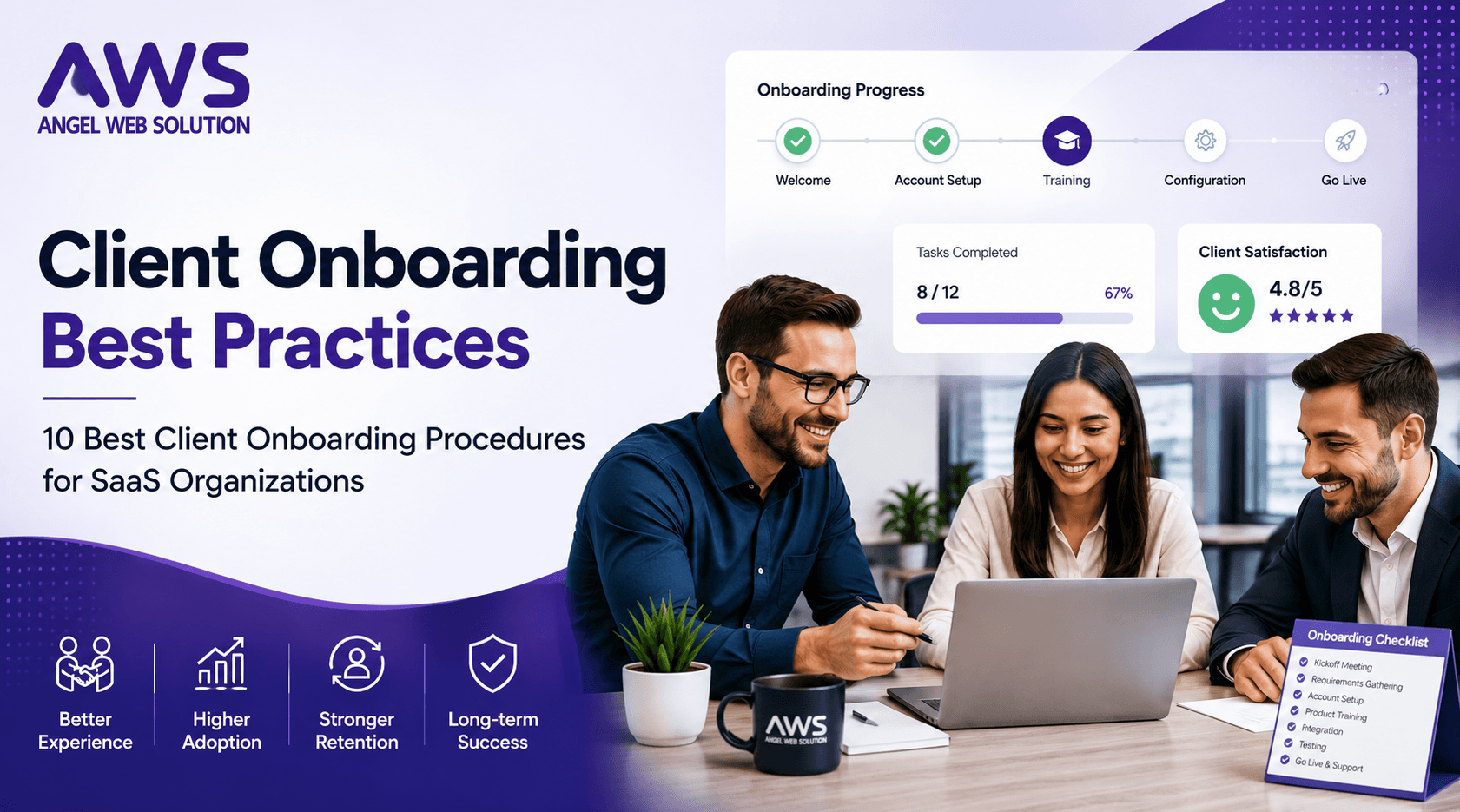
10 Best Client Onboarding Procedures for SaaS Organizations
Introduction
The success of any SaaS business depends on more than acquiring new customers. The real challenge is turning new clients into confident, long-term users who see continuous value from your product. This is where Client Onboarding Best Practices become essential. A structured onboarding process reduces customer confusion, shortens the learning curve, and improves user satisfaction from day one.
Many SaaS organizations invest heavily in marketing and sales but overlook the customer experience after the purchase. A smooth onboarding journey helps clients understand product features, achieve their first success quickly, and build trust in your brand. Following Client Onboarding Best Practices ensures every customer receives consistent guidance while reducing support requests and increasing retention.
Whether your SaaS company serves startups, enterprises, or growing businesses, a documented onboarding process creates better relationships and stronger business outcomes. This guide explains ten proven procedures that help SaaS organizations deliver exceptional onboarding experiences.
Table of Contents
- Why Client Onboarding Matters
- Create a Standardized Onboarding Framework
- Set Clear Goals and Expectations
- Assign a Dedicated Onboarding Manager
- Deliver a Personalized Welcome Experience
- Help Customers Achieve Quick Wins
Why Client Onboarding Matters
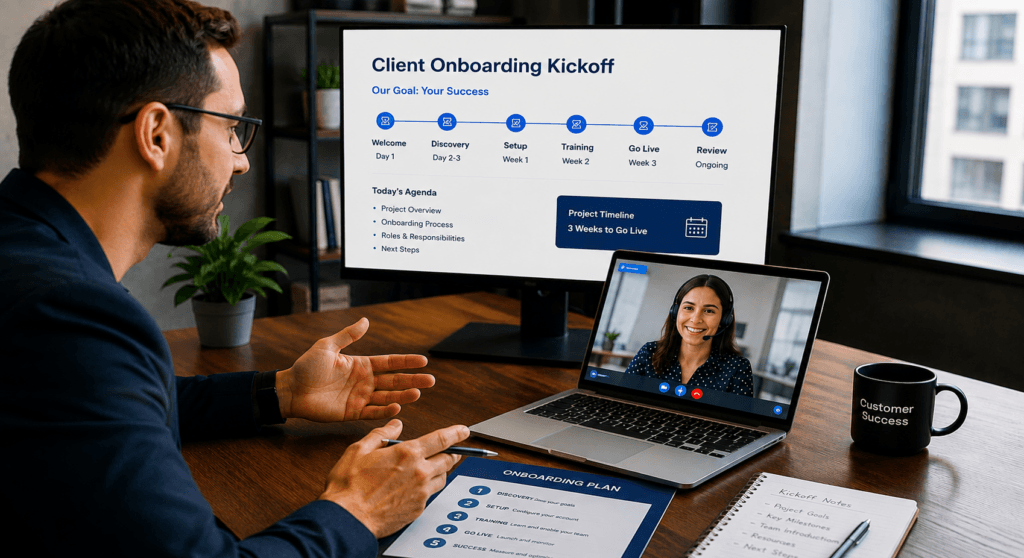
Every customer wants to experience value as quickly as possible after purchasing software. Implementing Client Onboarding Best Practices allows businesses to guide users confidently through setup, configuration, and adoption while minimizing frustration.
A successful onboarding process helps SaaS companies:
- Improve customer satisfaction
- Increase product adoption
- Reduce churn
- Build long-term loyalty
- Generate positive referrals
Organizations that consistently apply Client Onboarding Best Practices create predictable customer experiences and stronger business growth.
1. Create a Standardized Onboarding Framework
Every successful SaaS company follows a repeatable onboarding process. Instead of creating a different experience for every client, document every onboarding stage from account creation to full product adoption.
Your onboarding framework should include:
- Welcome email
- Account setup
- Initial training
- Feature walkthrough
- Progress tracking
- Success milestones
Following Client Onboarding Best Practices ensures every customer receives the same high-quality experience regardless of company size.
Build Repeatable Checklists
Detailed checklists help onboarding teams remain consistent. Every completed task moves the customer closer to product success while reducing missed steps.
Using Client Onboarding Best Practices, your internal teams can easily measure onboarding completion rates and identify improvement opportunities.
2. Set Clear Goals and Expectations
Customers should understand exactly what will happen during onboarding. Explain timelines, responsibilities, expected outcomes, and available resources before the implementation begins.
Clear communication prevents misunderstandings while improving customer confidence. Businesses following Client Onboarding Best Practices always establish measurable success metrics at the beginning of the customer journey.
Examples include:
- First project completed
- First team member invited
- First report generated
- First workflow automated
Define Success Milestones
Break onboarding into manageable phases instead of overwhelming customers with every feature at once.
Organizations implementing Client Onboarding Best Practices often celebrate small achievements because early success encourages continued platform adoption.
3. Assign a Dedicated Onboarding Manager
Providing a single point of contact simplifies communication throughout onboarding. Customers know exactly who to approach for questions, updates, or technical guidance.
A dedicated onboarding manager can:
- Schedule kickoff meetings
- Monitor progress
- Coordinate internal teams
- Resolve issues quickly
- Recommend best features
Companies that invest in Client Onboarding Best Practices understand that personalized guidance builds trust and increases customer satisfaction.
Encourage Proactive Communication
Don’t wait for customers to report problems. Schedule regular check-ins to identify challenges early and provide practical solutions.
Consistent communication reflects Client Onboarding Best Practices by creating confidence throughout the onboarding journey.
4. Deliver a Personalized Welcome Experience
First impressions matter. Personalized welcome emails, onboarding videos, and customized product tours help customers feel valued immediately after signup.
Instead of sending generic messages, personalize communication using:
- Customer name
- Company name
- Industry
- Business objectives
- Primary use cases
Businesses adopting Client Onboarding Best Practices understand that personalization increases engagement and strengthens customer relationships.
Provide Helpful Resources
Offer an organized resource library containing:
- Video tutorials
- Knowledge base articles
- FAQs
- Product documentation
- Community forums
These resources empower customers to solve simple questions independently while improving overall onboarding efficiency.
5. Help Customers Achieve Quick Wins
Customers should experience meaningful value within the first few days of using your software. Identify one important task they can complete quickly to demonstrate immediate benefits.
Quick wins may include:
- Creating the first project
- Sending the first invoice
- Automating one workflow
- Inviting teammates
- Building the first dashboard
Implementing Client Onboarding Best Practices helps customers recognize the practical value of your platform before frustration or uncertainty develops.
Measure Early Success
Track onboarding metrics such as:
- Time to first value
- Activation rate
- Feature adoption
- Customer engagement
- Support ticket volume
Monitoring these metrics allows SaaS organizations to continuously improve their onboarding strategy. Businesses committed to Client Onboarding Best Practices regularly review customer feedback, analyze onboarding performance, and refine each stage to create a smoother, faster, and more rewarding customer experience. These improvements not only increase product adoption but also strengthen long-term customer relationships, laying the foundation for higher retention, stronger loyalty, and sustainable recurring revenue growth.
6. Provide Interactive Product Training
Training is one of the most important stages of customer onboarding. Instead of overwhelming users with long documentation, provide interactive product demonstrations, guided walkthroughs, webinars, and short tutorial videos that explain the most valuable features. Effective Client Onboarding Best Practices focus on helping customers learn by doing rather than simply reading instructions.
Use Multiple Learning Formats
Every customer learns differently. Offer resources such as:
- Live onboarding sessions
- Recorded video tutorials
- Interactive product tours
- Knowledge base articles
- Downloadable guides
Using multiple formats improves knowledge retention and helps customers become confident users faster. Organizations following Client Onboarding Best Practices regularly update their training materials as new features are released.
7. Collect Feedback Throughout the Onboarding Journey
Customer feedback helps SaaS companies identify gaps in the onboarding experience before they become larger problems. Instead of waiting until onboarding is complete, request feedback after every major milestone.
Useful feedback methods include:
- Short surveys
- Customer interviews
- Net Promoter Score (NPS)
- Customer Satisfaction (CSAT) surveys
- In-app feedback forms
Businesses that prioritize Client Onboarding Best Practices understand that listening to customers creates continuous improvement opportunities.
Act on Customer Suggestions
Collecting feedback alone is not enough. Review responses regularly, identify common pain points, and implement meaningful improvements. Applying Client Onboarding Best Practices ensures customer opinions directly influence future onboarding enhancements.
8. Automate Repetitive Onboarding Tasks
Automation allows onboarding teams to focus on building customer relationships instead of performing repetitive manual work. Automating routine activities improves consistency while reducing human error.
Common automation examples include:
- Welcome email sequences
- Account activation reminders
- Task notifications
- Progress tracking
- Follow-up emails
- In-app guidance
Successful SaaS businesses combine automation with personalized support. Client Onboarding Best Practices encourage organizations to automate repetitive processes while maintaining a human connection whenever customers need assistance.
Balance Automation with Human Support
Automation should simplify onboarding, not replace meaningful conversations. Customers often require strategic advice that only experienced onboarding specialists can provide. Companies using Client Onboarding Best Practices achieve better results by combining technology with personalized service.
9. Monitor Key Onboarding Metrics
Without performance data, improving onboarding becomes difficult. Track measurable indicators that reveal how successfully customers adopt your software and achieve their desired outcomes.
Important metrics include:
- Customer activation rate
- Time to first value
- Product adoption rate
- Feature usage
- Training completion rate
- Support ticket volume
- Customer retention
- Expansion opportunities
Monitoring these metrics helps organizations refine every stage of the onboarding process. Client Onboarding Best Practices emphasize data-driven decision-making instead of assumptions.
Review Performance Regularly
Create monthly onboarding reports to identify trends, strengths, and opportunities for improvement. Teams following Client Onboarding Best Practices use analytics to optimize customer experiences and increase long-term retention.
10. Continue Customer Success Beyond Onboarding
Customer onboarding does not end after implementation. Long-term success depends on continuous education, proactive communication, and regular business reviews.
Keep customers engaged by offering:
- Quarterly business reviews
- Product update webinars
- Feature announcements
- Success newsletters
- Advanced training sessions
- Customer community access
Organizations committed to Client Onboarding Best Practices understand that onboarding naturally evolves into an ongoing customer success program.
Build Long-Term Relationships
Maintain regular communication even after customers become experienced users. Recommend advanced features, share industry insights, and celebrate customer achievements. Applying Client Onboarding Best Practices helps strengthen loyalty while encouraging product expansion and long-term partnerships.

Conclusion
An effective onboarding strategy creates the foundation for long-lasting customer relationships and sustainable SaaS growth. Every interaction during the onboarding process influences customer confidence, satisfaction, and future purchasing decisions. By implementing Client Onboarding Best Practices, SaaS organizations can reduce churn, improve product adoption, increase customer retention, and deliver measurable business value from the very beginning.
The ten procedures discussed in this guide provide a practical framework for creating a consistent, scalable, and customer-focused onboarding experience. Businesses that continuously refine their processes, collect feedback, monitor performance, and invest in customer success will gain a significant competitive advantage. Most importantly, Client Onboarding Best Practices help transform first-time customers into loyal advocates who actively recommend your software to others.